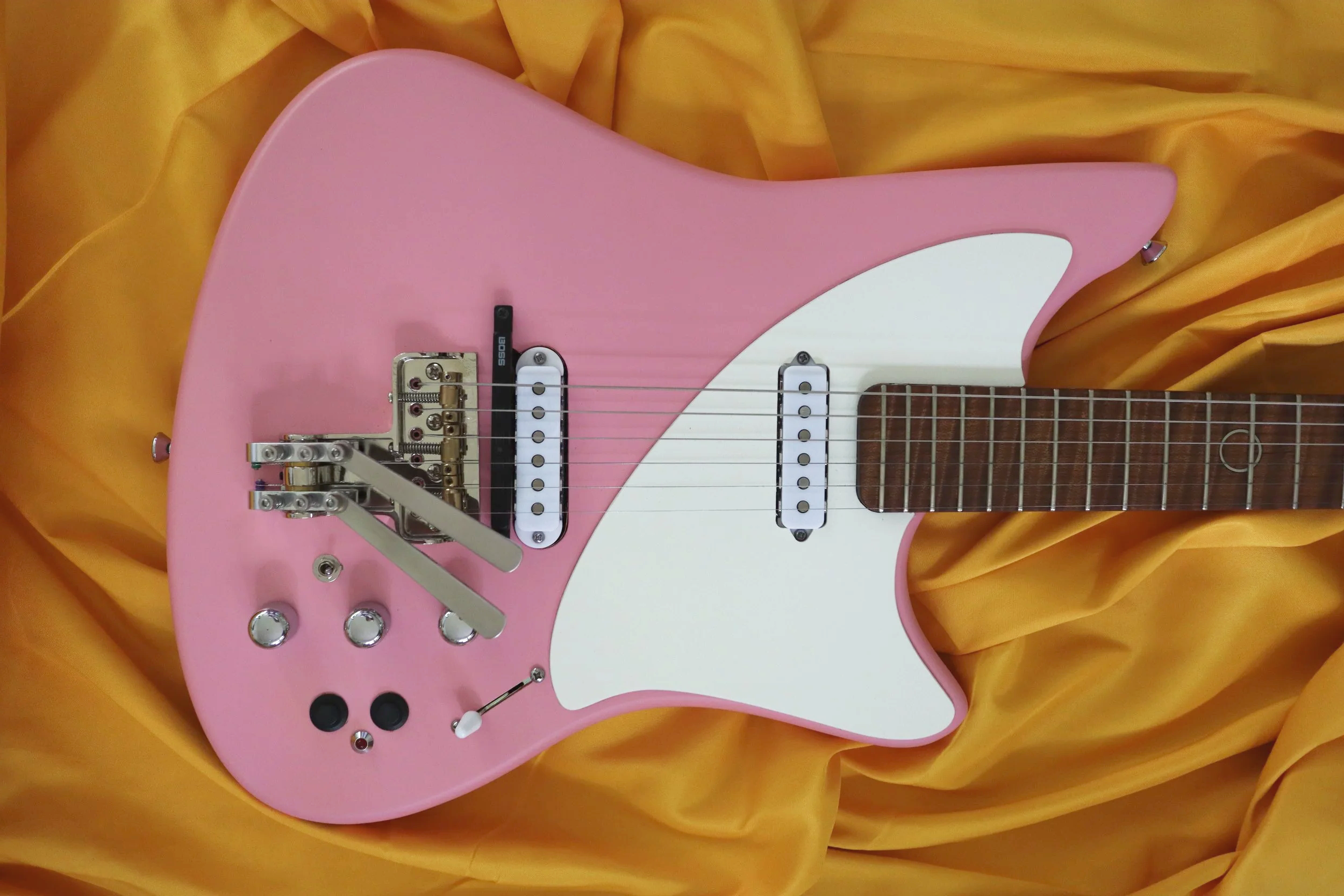
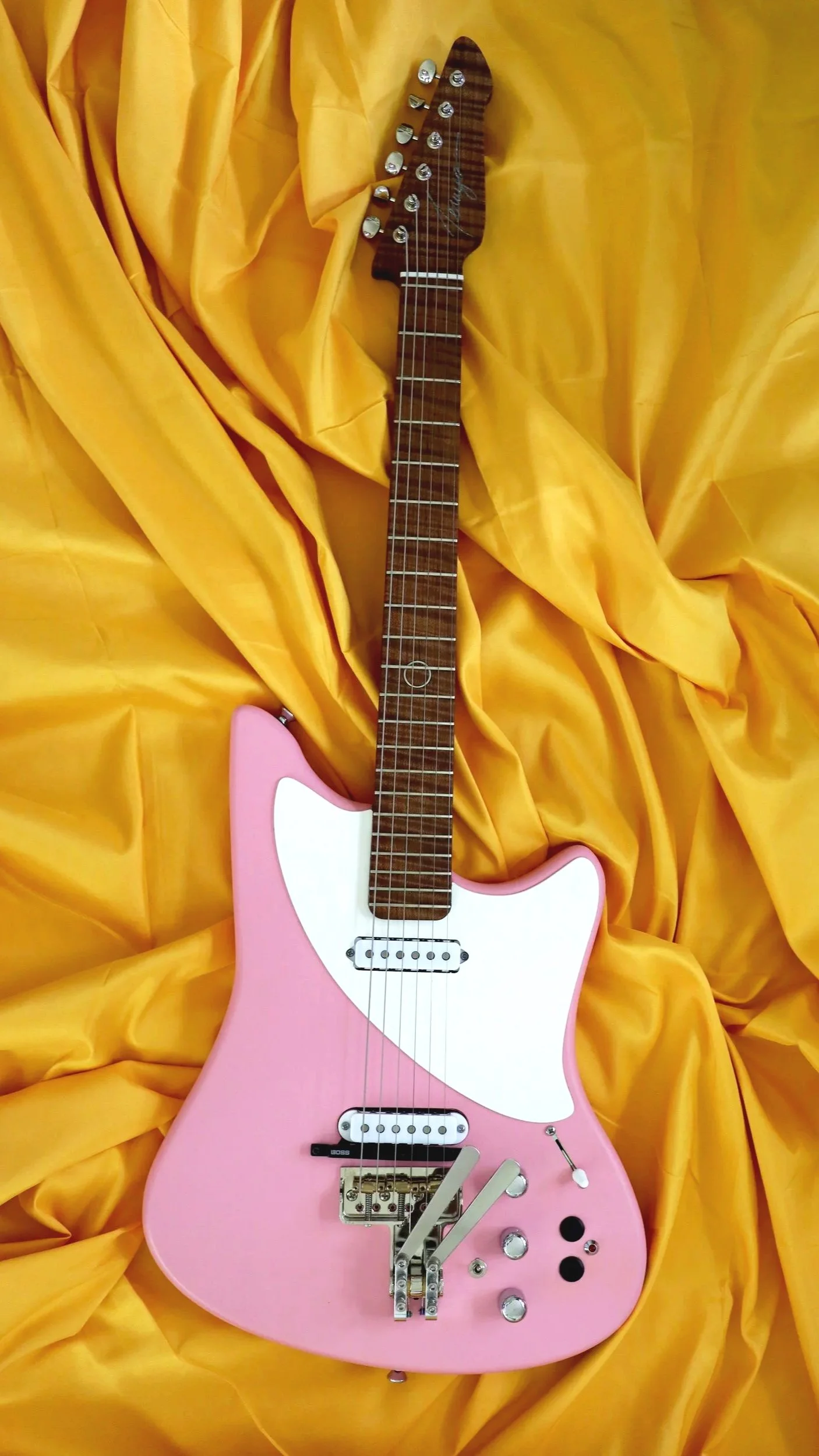
The Matriarch
Born from the greatest tragedy of my life, The Matriarch pays tribute to my late wife, Karrah Teruya.
Karrah and I were married for 10 years, 11 months, and 14 days. She survived Acute Lymphoblastic Leukemia and a bone marrow transplant for 7 years. Karrah was the love of my life, and the loss of her was absolutely devastating.
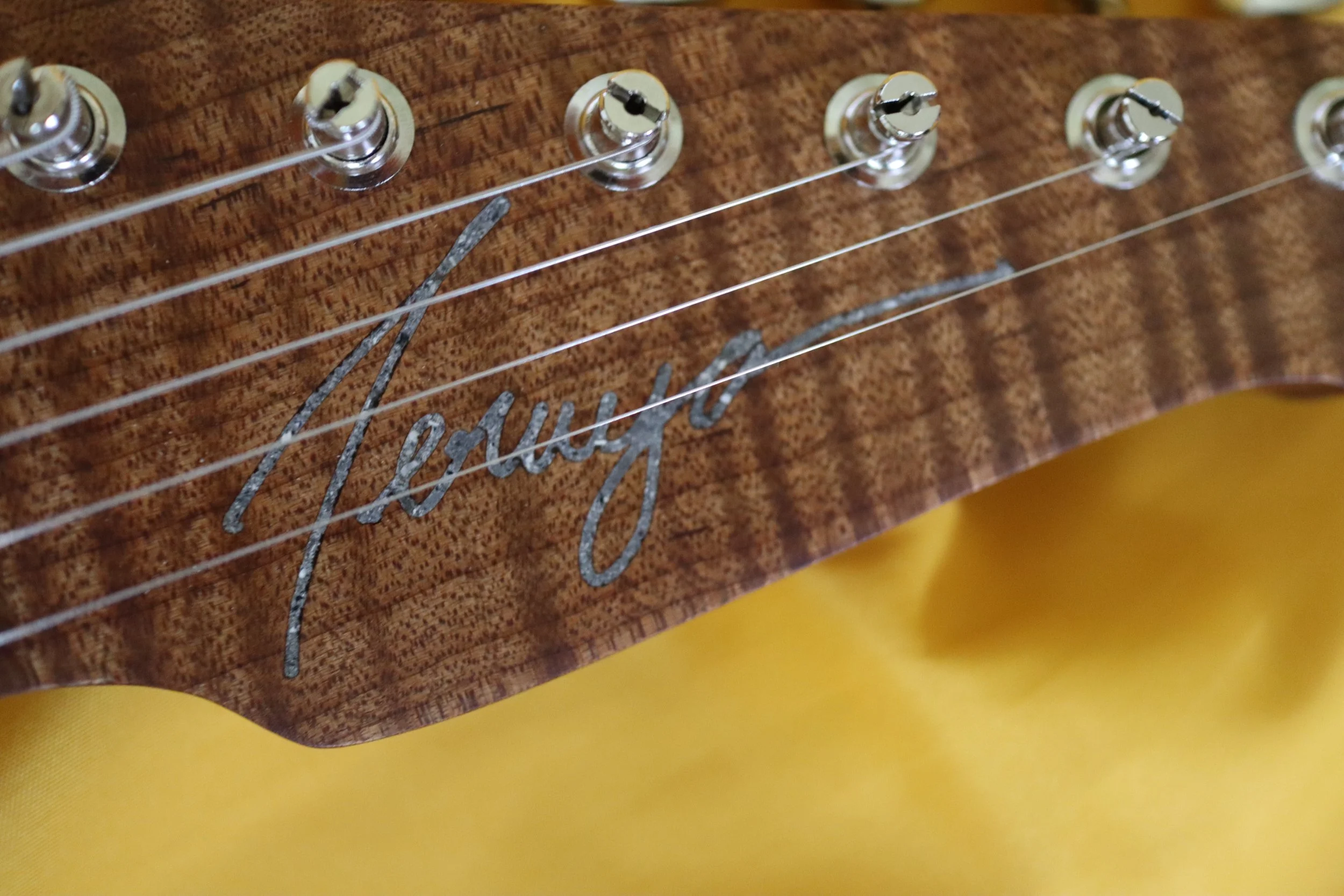
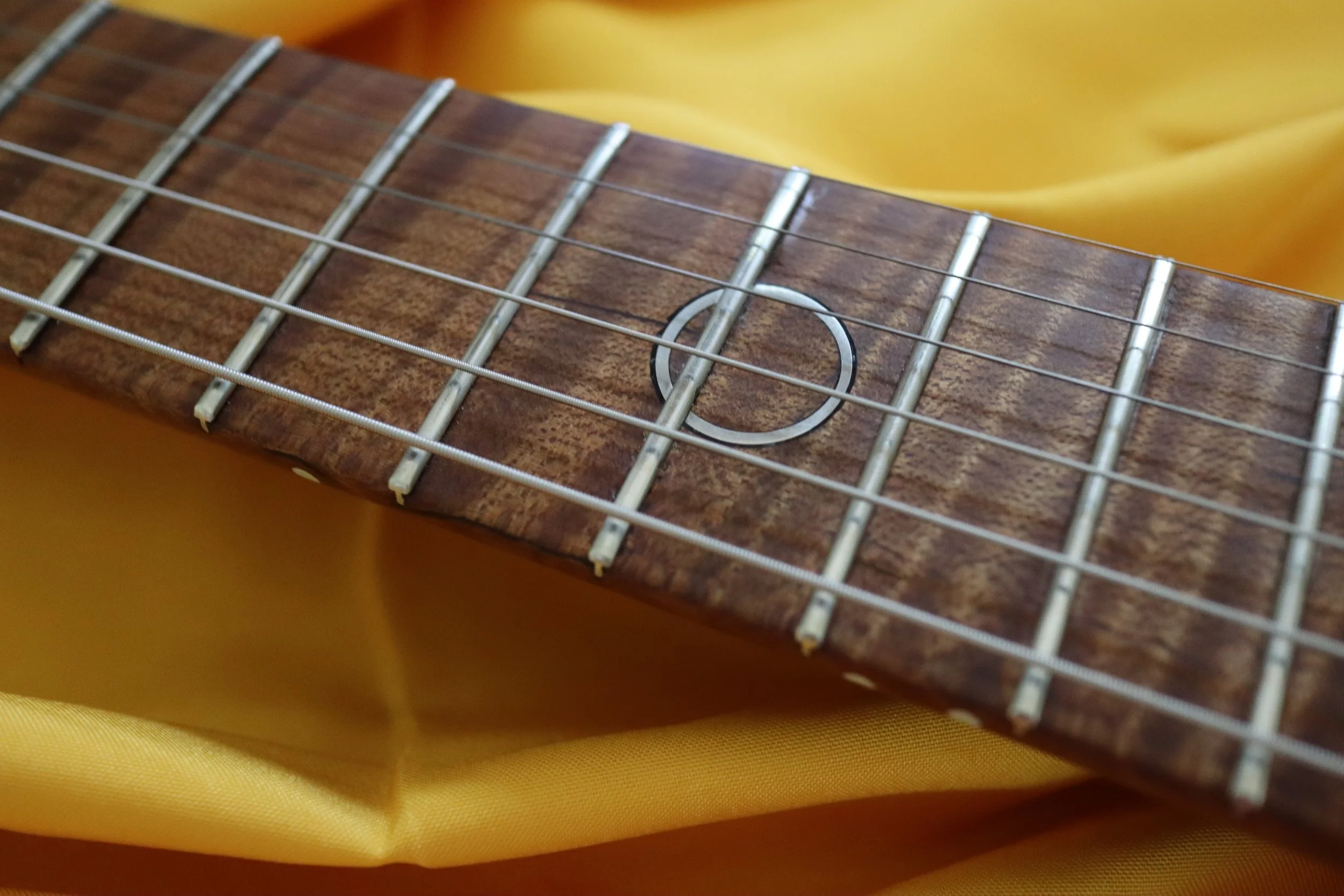
During the winter of 2025, I had what I can only describe as a "knowing" that I would not be able to build any other guitars until I found some way to pay tribute to her by building something in her memory. I came up with the idea to inlay her ashes in the headstock of the guitar, and later came up with the idea to use her wedding band as an inlay in the fretboard. I decided to inlay her wedding band at the 10¾ fret instead of the 12th, to symbolize how many years we had been married.
This was the most deeply personal and painful guitar-making experience of my life. I made so many amateur mistakes, which I later discovered was due to my emotional and technical parts of my brain clashing.
This guitar represents so many things, but most importantly, it allows me to feel connected to Karrah in a way that is deeply personal to me. She is now physically part of the music that comes from The Matriarch; she inspires every note I play, and I have noticed that I play with much more intention and focus on melody when I pick it up.
The Matriarch holds a very special place in my heart and feels deeply personal to me. I never pick it up without feeling how special it is. Karrah changed my life in so many ways, and I continue to feel the effects of her love even after she has left this life.
Wood Selection
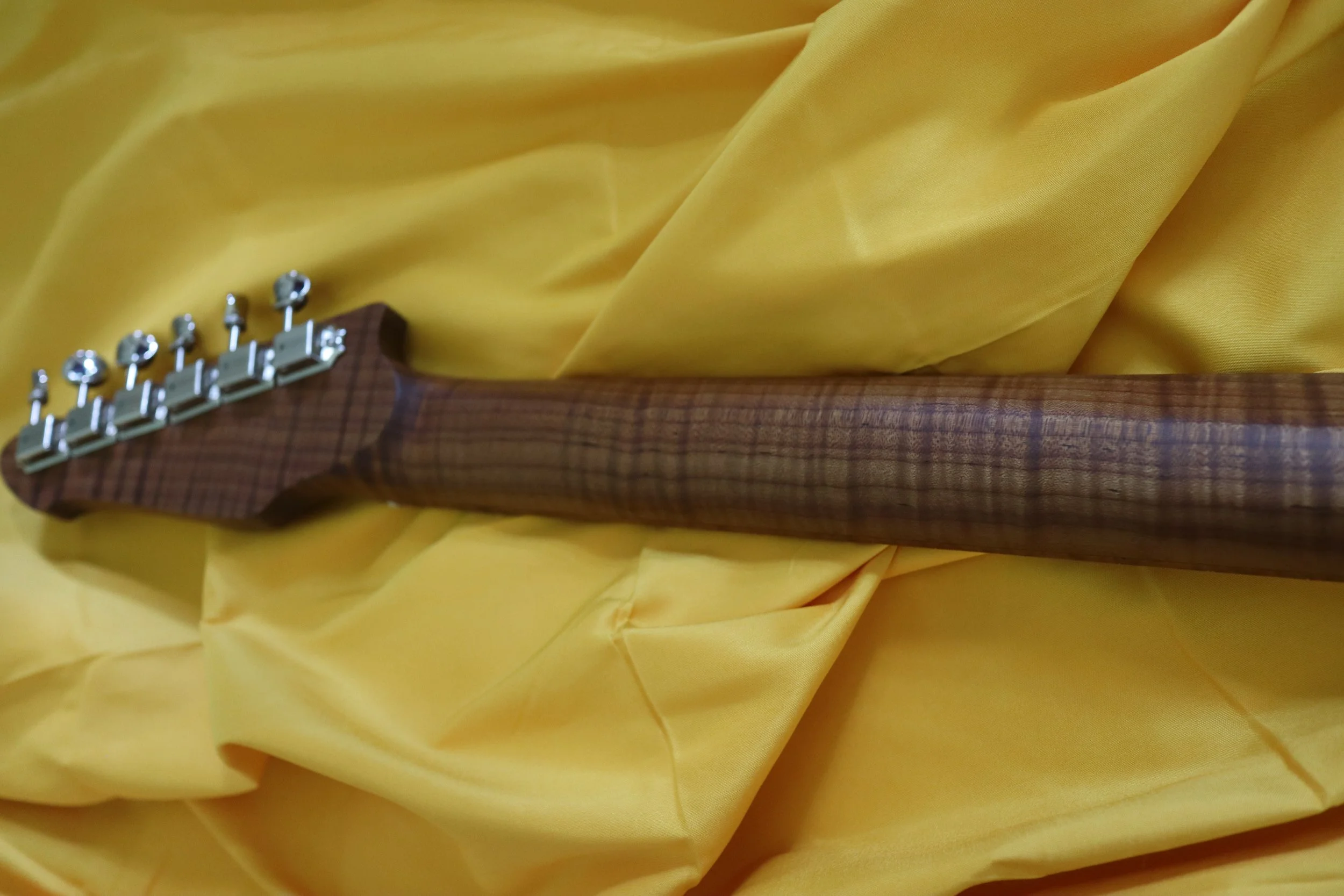
I selected a classic combination for this guitar using an alder body and torrified maple neck and fretboard; a time-tested, proven combination that yields great results.
Neck Construction
The neck is built with a torrefied AAA flame maple fretboard and neck. In place of a traditional truss rod, I use a carbon fiber "D" tube that runs the full length of the neck. A single large bolt secures the neck at the joint, rather than the four wood screws that have been the industry standard for far too long. The joint is designed to lock the neck into position precisely; the bolt simply holds it there.
I personally dislike truss rods. I understand the argument for neck relief, but in my experience, if the fretwork is solid, there is simply no need for a bow in the neck. The carbon fiber tube serves two purposes. First, it creates an exceptionally stiff and strong neck. Second, it creates a hollow channel through the neck, which adds resonance you can both hear and feel. When your fingers contact the fretboard, vibrations translate directly into your hands; that small amount of additional tactile feedback connects you to the notes in a way that a conventional neck doesn't. You feel what you're playing. It's subtle, but once you notice it, you can't unfeel it.
Body
The body is a solid alder blank; nothing fancy, but it delivers great sound and structural stability.
Electronics
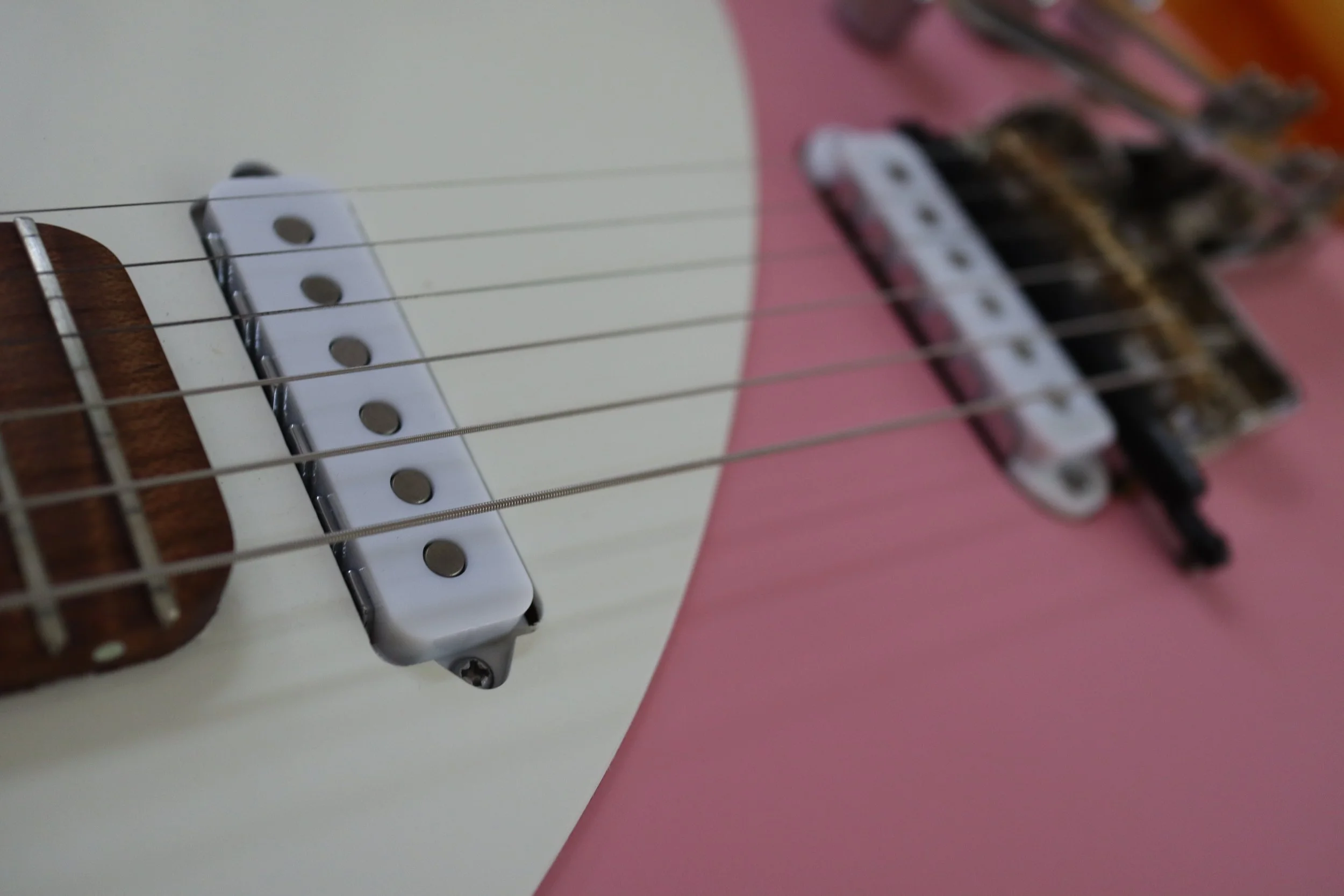
I wanted to use "Jag" style pickups on this guitar and came across an amazing demo of Lollar's take on the "Jag" pickup. They sounded absolutely incredible to my ears, and I immediately purchased a set. I bypassed the traditional lead/rhythm circuit and ran a more traditional 3-way switch, one volume, one tone.
In late 2024, I discovered the music of Mk.Gee and became a huge fan of his tone. I spent thousands of dollars acquiring vintage guitar synths and really enjoyed using such unique equipment to create unusual tones. The only problem was the hideous synth pickup that needed to be installed on the guitar. With this build, I was finally able to install a proper Roland GK pickup kit.
Hardware
Since this is more of a classic/vintage vibe guitar, I stuck with vintage tuners from Gotoh; they have a classic look but a huge improvement in gear ratio.
The bridge is a B&G bender bridge from Certano. I have been curious about bender bridges for a long time, so this was finally my chance to try one out. It is a beautiful addition to the guitar and gives you those lap steel pitch bends that are so pleasant. Playing a bender bridge requires a completely new skill set, and I am enjoying learning a completely new playing style from a single piece of hardware.