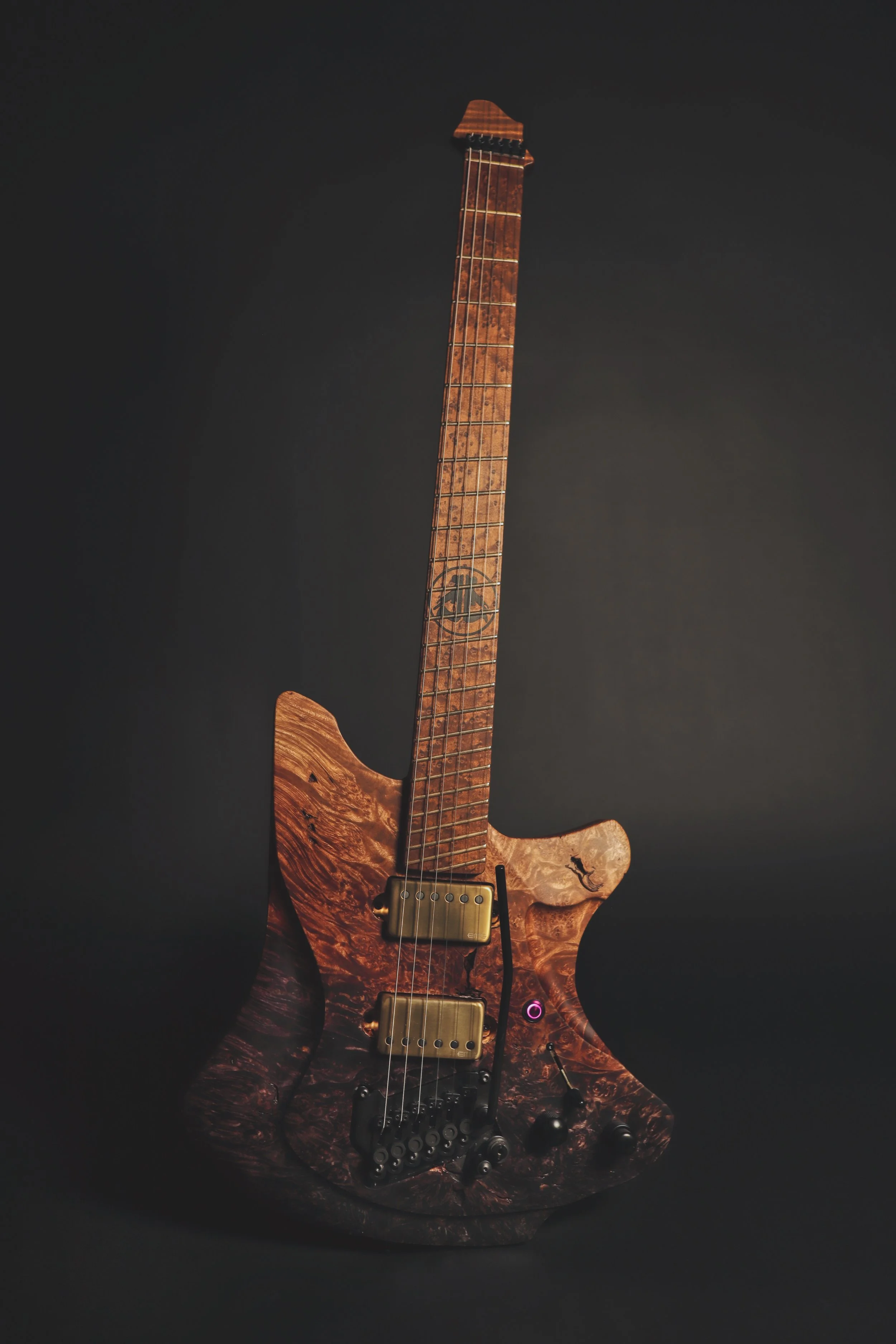
The Endurance
The Endurance is the product of over ten years of research and development.
In my early twenties I became a devoted fan of Allan Holdsworth. I chased his tone relentlessly, and as part of that chase I purchased his signature headless guitar. That instrument was smaller than a standard guitar, but it somehow felt exactly right. Something about it settled into my hands in a way I couldn't fully explain, and I never forgot it.
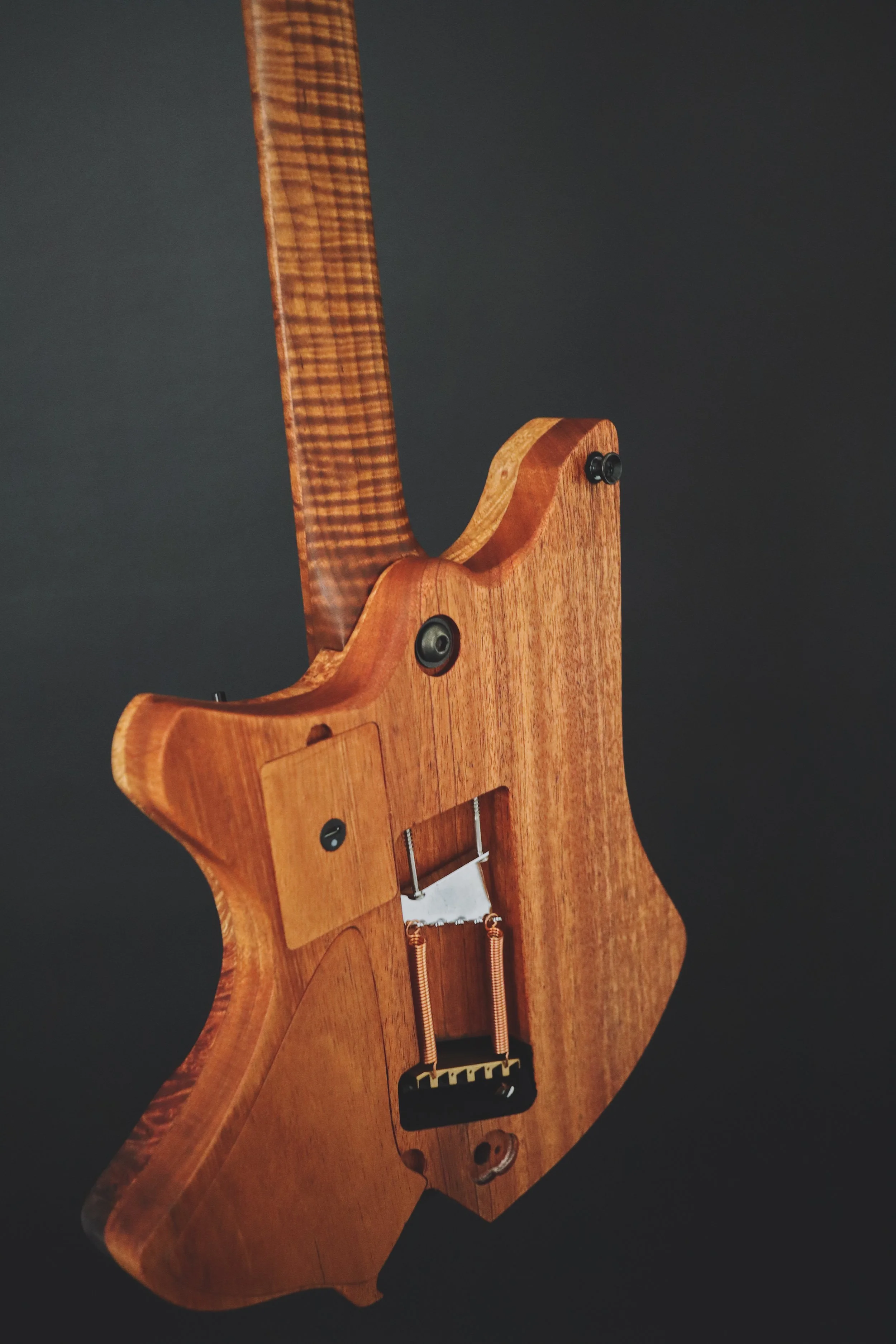
Over the years I built several iterations of what would eventually become the Endurance. I made mental notes after every build and continued improving the design. New hardware manufacturers arrived on the scene, my building methods matured, and my ideas sharpened. One of the features I was most committed to was the ability to break the guitar down and fit it into carry-on luggage. That final piece of the puzzle only became possible recently, thanks to innovations in guitar hardware.
I am very happy with how this guitar turned out.
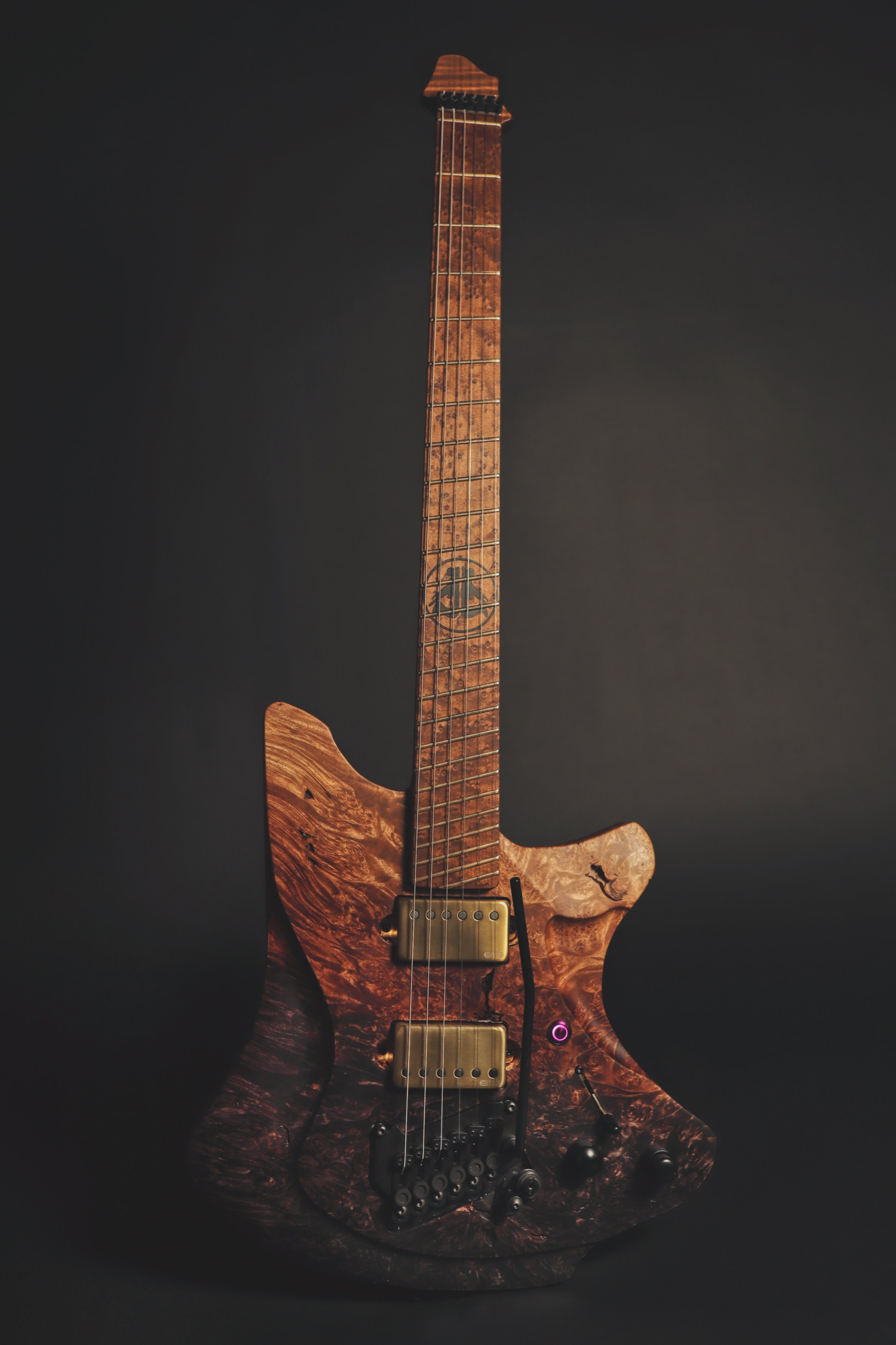
Wood Selection
I love the classic combination of maple and mahogany, and I source through various small vendors, selecting only the pieces that truly speak to me.
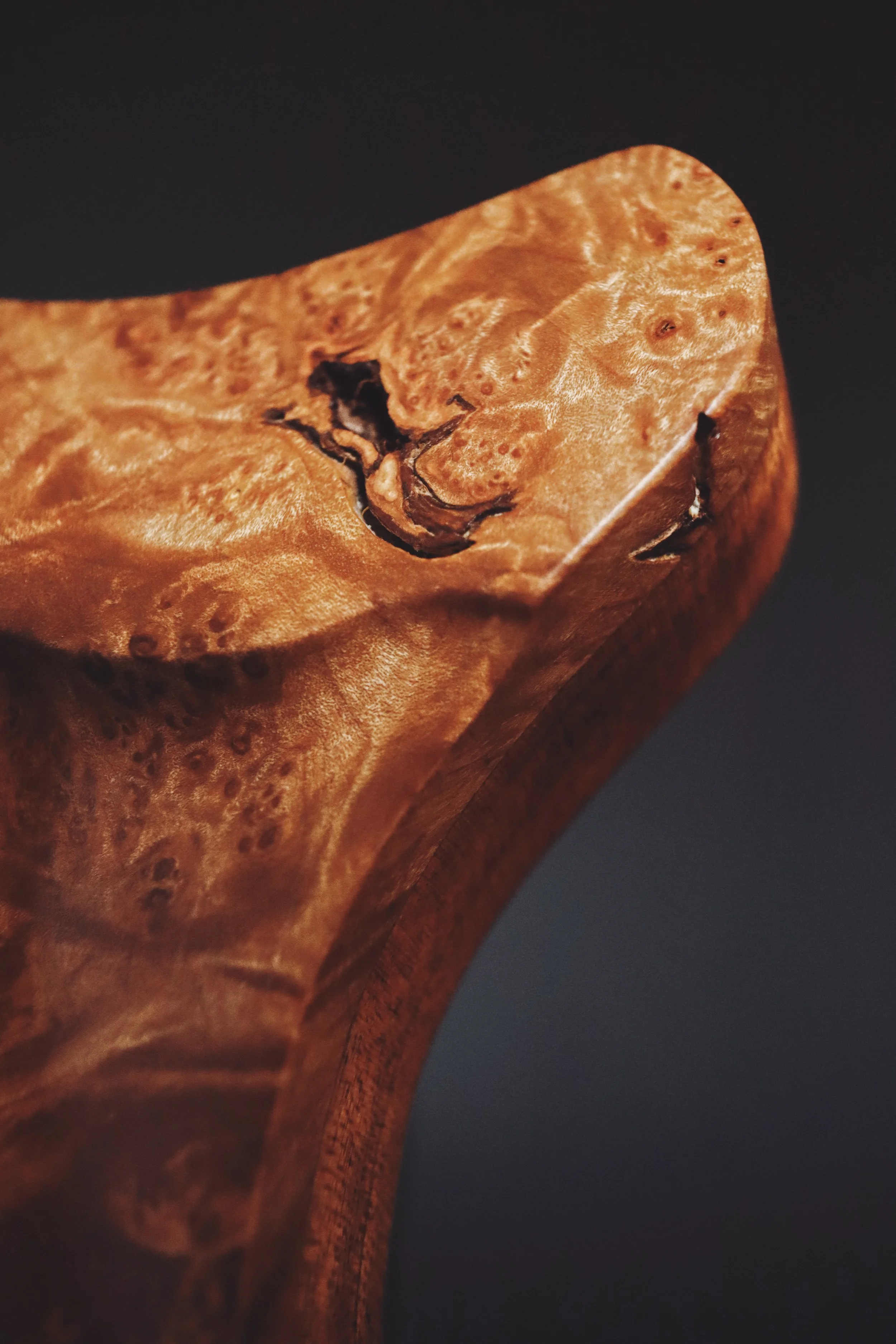
When it comes to maple, I specifically seek out burl. I can stare at a piece of maple burl for hours. The figure in the wood reminds me of the Crab Nebula, and it genuinely stops me in my tracks to think about how the inside of a tumor-like growth on a tree can look like something millions of light-years away. Nature is doing something extraordinary in both places, and the parallel feels meaningful.
Mahogany is a humble wood, tried and true. I select it primarily by weight; I favor lighter pieces and always chamber the body. Chambering allows the wood to breathe and resonate more freely, and it gives me the control I need to craft the specific sonic profile this guitar is designed around.
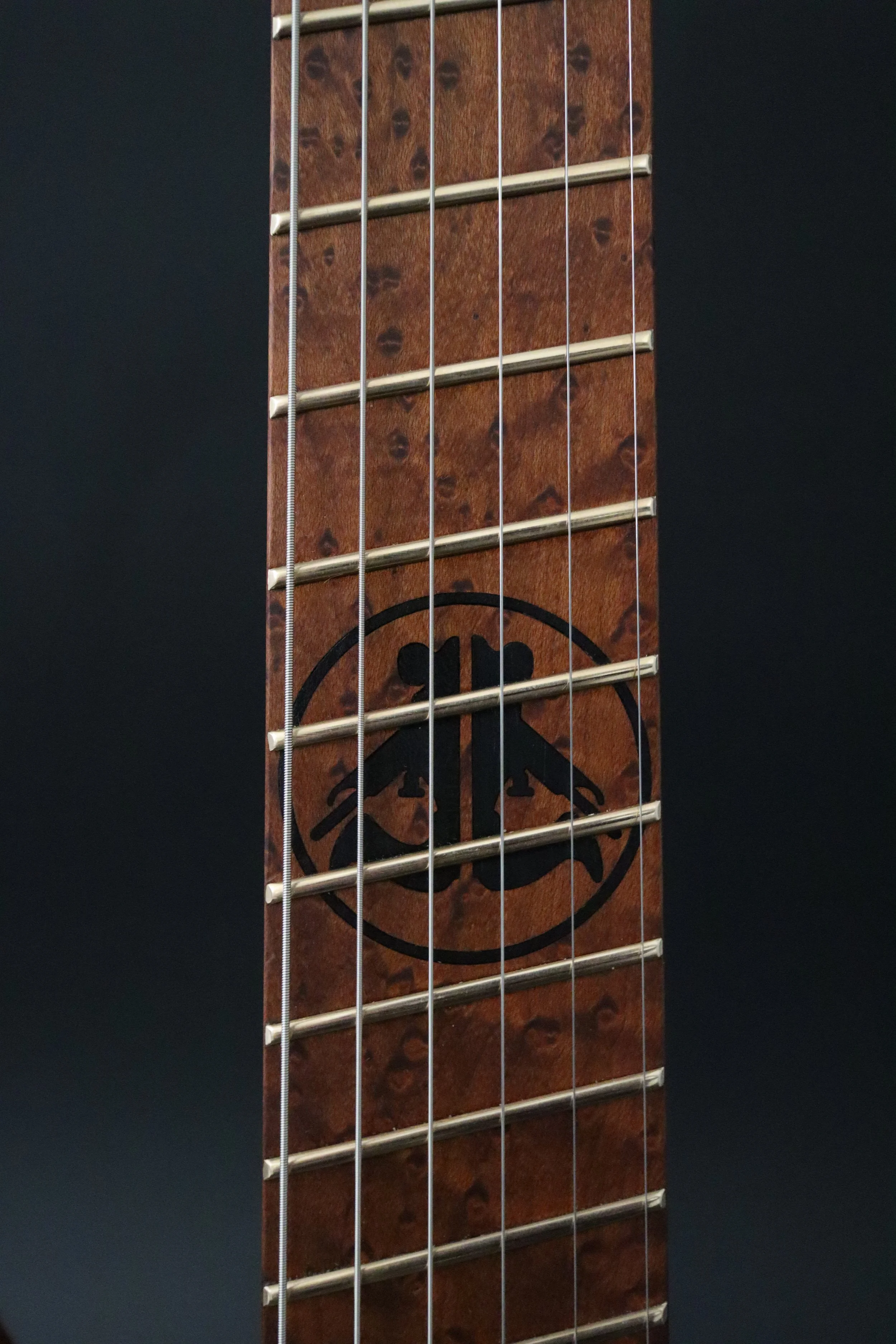
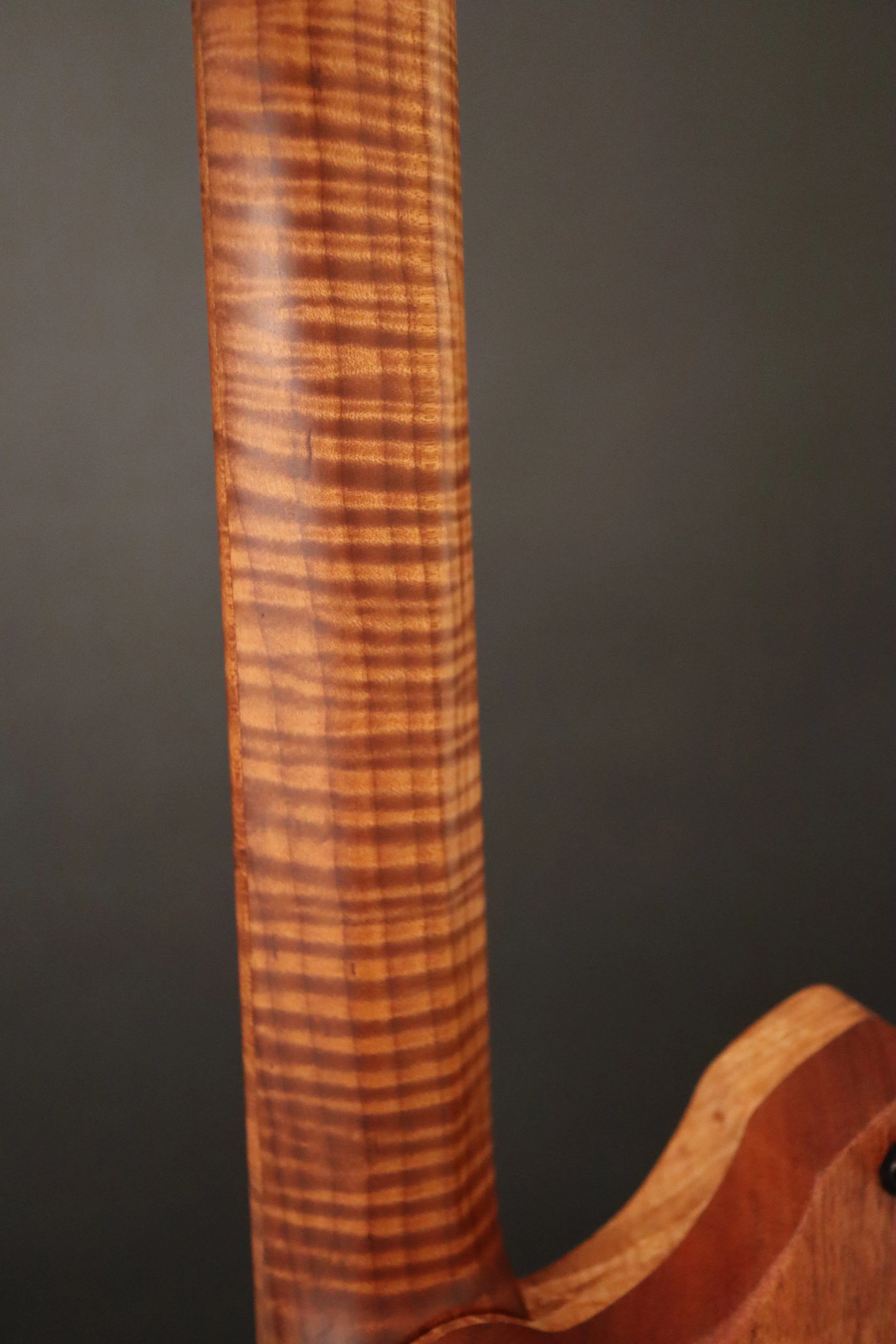
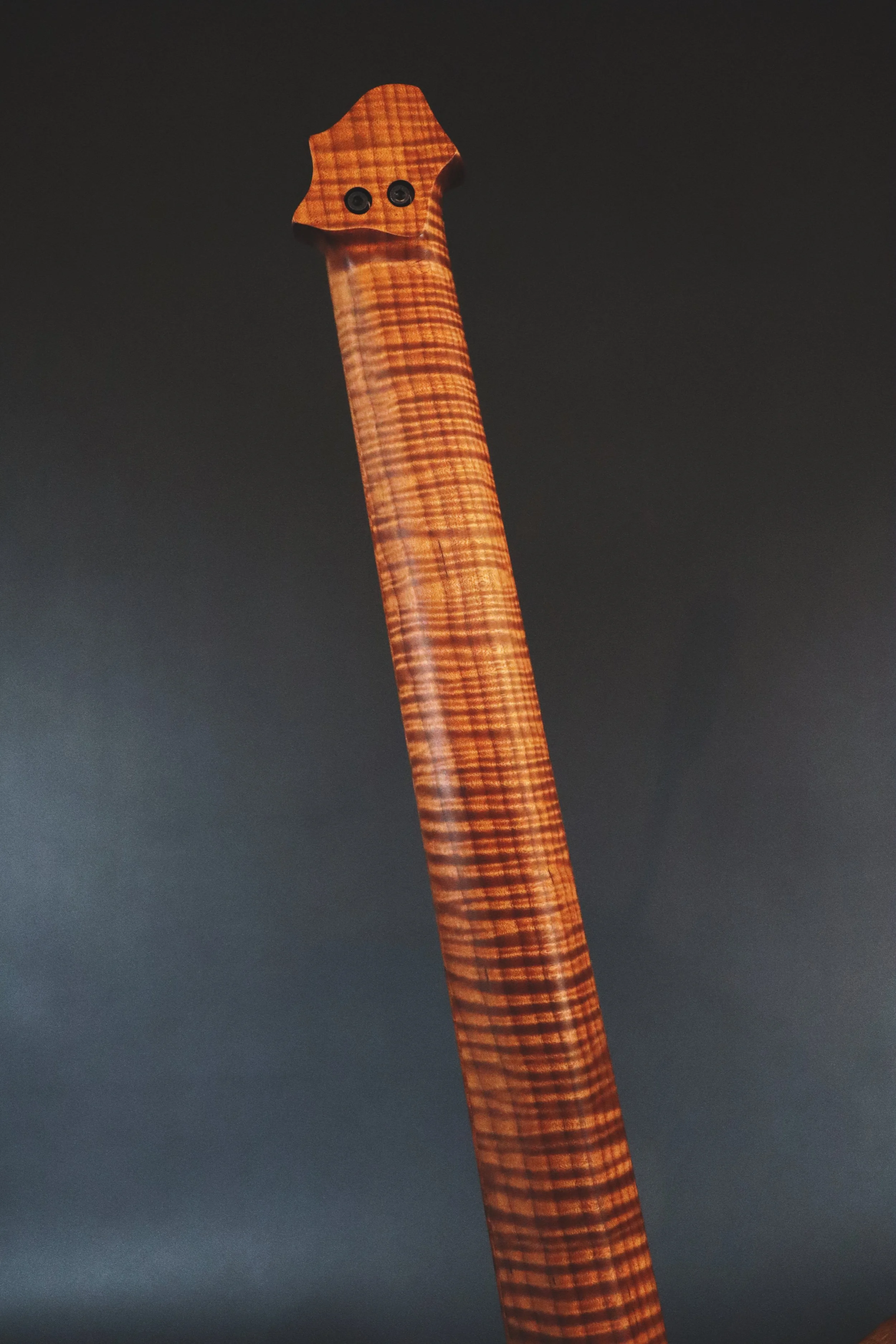
For the neck, I love the combination of a flamed maple shaft and a birdseye maple fretboard. Between the burl body, the birdseye, and the flame, nearly every variant of figured maple is represented on this guitar. The only one missing is quilted, and that's intentional; in my opinion, birdseye pairs with burl more naturally than any other figure would. A high-grade flame on the back of a neck is always a showstopper on its own.
I have been using torrefied woods for necks and fretboards for a while now and I strongly prefer them. Torrefaction is essentially a baking process; the wood is subjected to sustained high heat, which caramelizes some of the natural sugars and removes virtually all residual moisture. The result is a bone-dry neck, which is critical for long-term stability. The caramel color is a byproduct, not the point, though it doesn't hurt. The trade-off is brittleness; torrefied maple is significantly more fragile to work with, and it demands a lot of patience on the bench.
Neck Construction
The neck is built with a torrefied AAA birdseye maple fretboard and a torrefied AAA flamed maple neck. In place of a traditional truss rod, I use a carbon fiber "D" tube that runs the full length of the neck. A single large bolt secures the neck at the joint, rather than the four wood screws that have been the industry standard for far too long. The joint is designed to lock the neck into position precisely; the bolt simply holds it there.
I personally dislike truss rods. I understand the argument for neck relief, but in my experience, if the fretwork is solid, there is simply no need for a bow in the neck. The carbon fiber tube serves two purposes. First, it creates an exceptionally stiff and strong neck. Second, it creates a hollow channel through the neck, which adds resonance you can both hear and feel. When your fingers contact the fretboard, vibrations translate directly into your hands. That small amount of additional tactile feedback connects you to the notes in a way that a conventional neck doesn't. You feel what you're playing. It's subtle, but once you notice it, you can't unfeel it.
Body
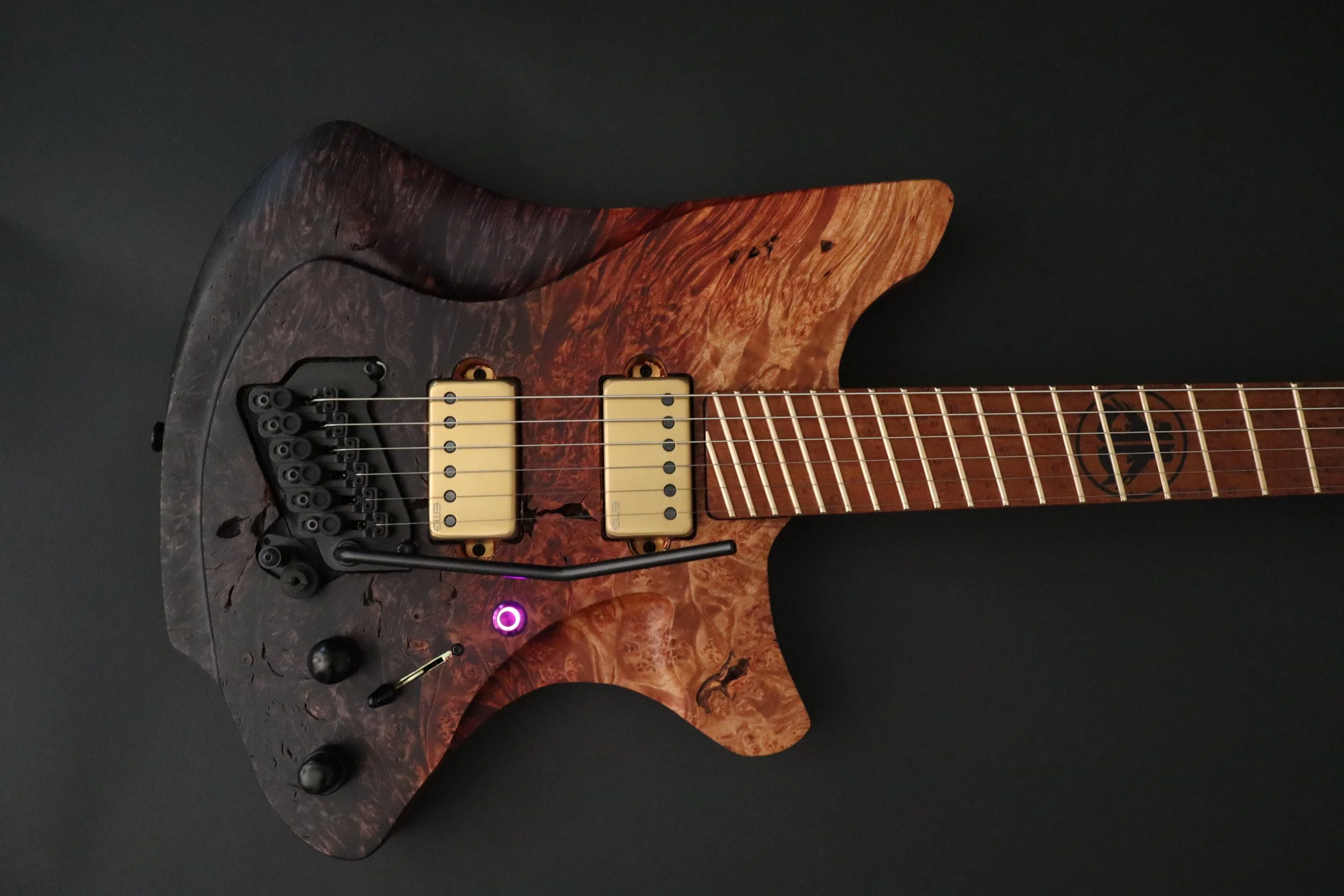
The body follows my classic recipe: mahogany and maple burl. I look for the lightest mahogany I can find and select burl pieces that feature both some flame and genuine burl figure in the same slab. I hand stain each guitar and finish it in oil.
I leave the natural voids unfilled. Nature is already doing something perfect, and I have no interest in pouring plastic into it. I built one guitar with an epoxy fill and will almost certainly never do it again. Epoxy is not a resonant material, and beyond the tonal compromise, it just felt wrong to put that much synthetic filler inside an instrument built around the character of the wood itself.
Electronics
Years ago I bought an EMG 57/66 set and was immediately drawn to the tone. Juicy is the word I keep coming back to. The output is high but the pickups retain enough dynamic sensitivity that nothing gets lost. The one thing I always wanted was a little more control over the midrange. The EMG VMC, a parametric mid sweep control, solved that. It's primarily designed for bass, but it translates well to guitar, and it allows me to dial in the mid frequency to a very specific sweet spot that I couldn't reach before.
Hardware
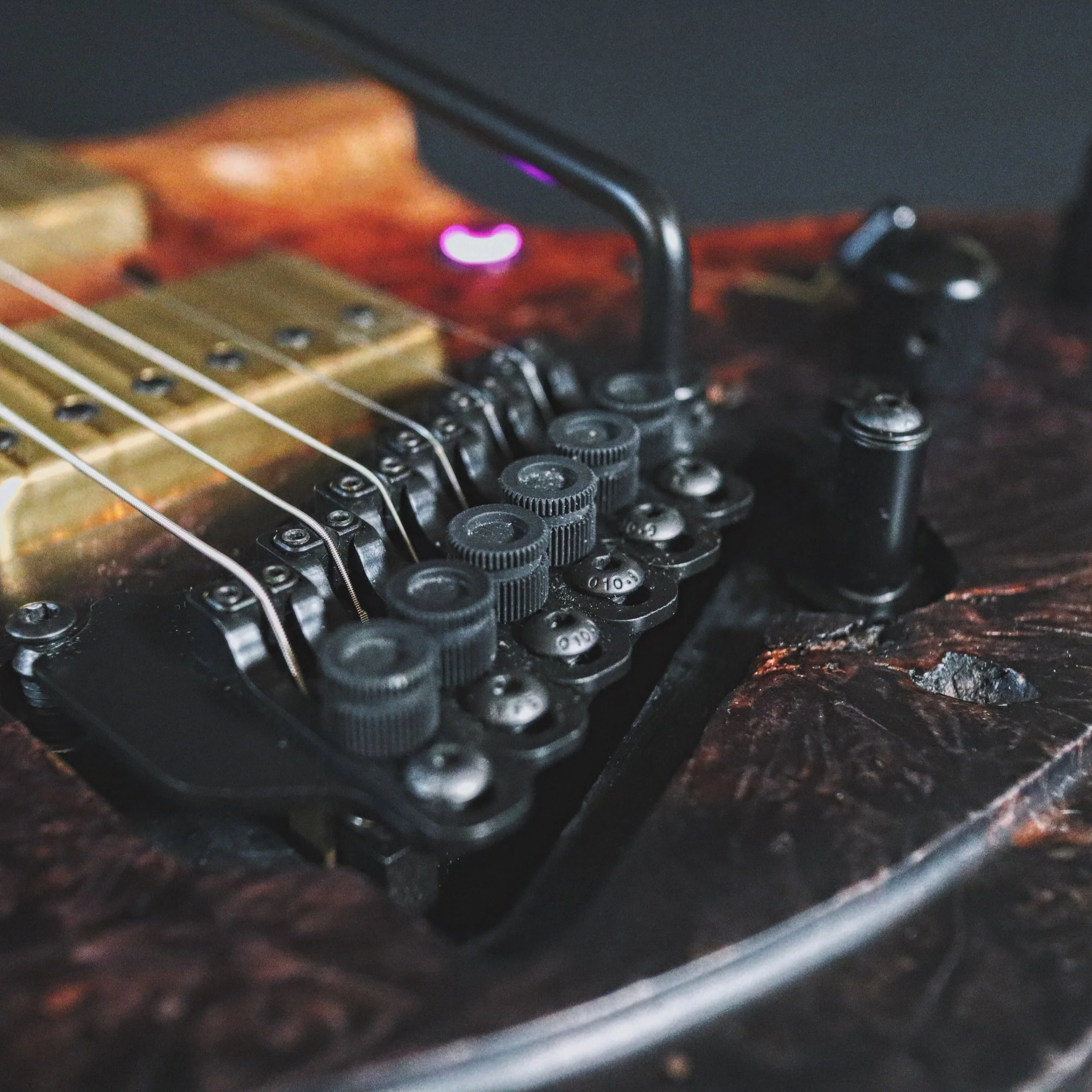
The tremolo is the RTS6M from Riviera. Years ago I received an email from the owner introducing his new design. At the time I was using other hardware and didn't have an immediate need for a new bridge, so I filed it away. A few years later I remembered that email and decided to give it a try. I was genuinely impressed. I believe wholeheartedly that Riviera makes the best headless multi-scale tremolo on the market, and I don't say that lightly.
Normally I would pair it with the Riviera headpiece, but this build required a headpiece that could be removed quickly and cleanly. Rock-N-Tune had just released a modular system that allowed for easy detachment of both the tremolo and the headpiece, which was exactly what I needed. After reaching out to them directly, I was able to secure the headpiece, and it became the crucial final piece that made the breakdown design possible.